Advertisement

The 2026 FIFA World Cup promises to be the most spectacular edition yet, featuring an expanded format and three host nations. This comprehensive guide covers everything you need to know about the World Cup 2026 schedule, from key dates to venue information and how to catch all the action.

Overview of the 2026 World Cup Tournament
The 23rd edition of the FIFA World Cup will take place from June 11 to July 19, 2026, making history as the first tournament hosted by three countries simultaneously. The United States, Canada, and Mexico will welcome 48 teams for what promises to be an unforgettable summer of football.
This expanded format means 104 matches will be played across 16 venues, significantly more than the 64 matches featured in previous tournaments. The World Cup 2026 schedule reflects this ambitious scope, with matches spanning nearly six weeks across North America.
Key Tournament Dates and Timeline
Opening Matches

The tournament officially kicks off on June 11, 2026, with Mexico taking the field at the iconic Estadio Azteca in Mexico City. This venue holds special significance as it hosted memorable World Cup finals in 1970 and 1986. Canada’s opening match follows on June 12 at BMO Field in Toronto, while the United States will begin their campaign on the same day.
Tournament Structure
The World Cup 2026 schedule incorporates an expanded group stage featuring 16 groups of three teams each. This format ensures more competitive matches while maintaining the tournament’s traditional structure. The group stage will run from June 11-27, followed by knockout rounds leading to the final.
The Grand Finale
The tournament concludes with the World Cup final on July 19, 2026. While FIFA hasn’t officially announced the final venue, speculation centers around major stadiums in the United States, given their hosting the majority of matches.

Complete Venue Guide
United States Venues
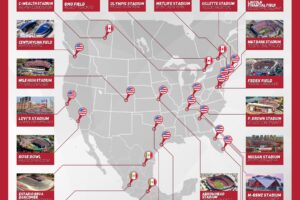
The United States will host the lion’s share of matches, with 11 stadiums across major metropolitan areas:
East Coast:

- MetLife Stadium (New York/New Jersey)
- Gillette Stadium (Boston)
- Lincoln Financial Field (Philadelphia)
- Hard Rock Stadium (Miami)
- Mercedes-Benz Stadium (Atlanta)
Central:
- AT&T Stadium (Dallas)
- NRG Stadium (Houston)
- Arrowhead Stadium (Kansas City)
West Coast:
- SoFi Stadium (Los Angeles)
- Levi’s Stadium (San Francisco Bay Area)
- Lumen Field (Seattle)
Mexico Venues

Mexico contributes three historic venues to the World Cup 2026 schedule:
- Estadio Azteca (Mexico City) – The tournament’s opening venue
- Estadio BBVA (Monterrey)
- Estadio Akron (Guadalajara)
Canada Venues

Canada rounds out the host cities with two venues:
- BMO Field (Toronto)
- BC Place (Vancouver)
World Cup 2026 Schedule Structure
Group Stage Format
The expanded 48-team format introduces a unique group stage structure. Unlike previous tournaments with eight groups of four teams, the World Cup 2026 schedule features 16 groups of three teams each. This format ensures every match carries significant weight, as teams have fewer opportunities to recover from poor results.
Each group will play their matches over approximately four days, with rest periods built into the World Cup 2026 schedule to accommodate player recovery and travel between venues.
Knockout Phase Timeline

Following the group stage, 32 teams advance to the knockout rounds:
- Round of 32: June 29 – July 3
- Round of 16: July 5 – July 8
- Quarter-finals: July 11 – July 12
- Semi-finals: July 15 – July 16
- Final: July 19
How to Watch: TV and Streaming Guide

Broadcasting Partners
Major networks worldwide are securing rights to broadcast the World Cup 2026 schedule. In the United States, expect coverage from traditional powerhouses like FOX Sports, which has historically carried FIFA World Cup tournaments. Streaming platforms are also positioning themselves to provide comprehensive coverage.
International Coverage
Given the tournament’s scope, international broadcasters are preparing extensive coverage plans. The World Cup 2026 schedule’s friendly time zones for American audiences may impact viewing patterns in Europe and Asia, potentially creating new opportunities for broadcasters.
Digital Streaming Options
FIFA’s official platforms will likely offer extensive digital coverage, including match highlights, behind-the-scenes content, and multi-angle viewing options. Social media integration will play a crucial role in how fans consume World Cup 2026 schedule content.
Qualification Process and Team Selection
Regional Qualification
The expanded format requires a comprehensive qualification process across all FIFA confederations. European teams compete through the UEFA qualification system, with matches running from March to November 2025. The final playoff matches are scheduled for March 2026, just months before the tournament begins.
CONMEBOL qualification from South America has already secured several spots, with traditional powerhouses like Argentina and Brazil confirming their places early in the process.
Host Nation Advantages
As host nations, the United States, Canada, and Mexico receive automatic qualification spots. This eliminates the pressure of qualification campaigns and allows these teams to focus entirely on tournament preparation throughout the World Cup 2026 schedule development period.
As one of the host nations, the United States automatically qualifies for the tournament. Fans are already buzzing with expectations about the squad’s potential. For a deeper look at the possible lineup and bold predictions, check out our full analysis here: USA World Cup 2026 squad predictions
Tournament Draw and Final Schedule Release
Official Draw Event
The tournament draw will take place on December 5, 2025, at the Kennedy Center in Washington, D.C. This prestigious event will determine group compositions and set the detailed World Cup 2026 schedule that fans worldwide eagerly await.
Mexico’s Special Placement
FIFA has confirmed that Mexico will be automatically placed in Group A, ensuring they open the tournament at the Estadio Azteca. This decision honors Mexico’s role as a host nation and creates a spectacular opening ceremony atmosphere.
Final Schedule Details
While the general World Cup 2026 schedule framework is established, specific kick-off times and detailed match pairings will be announced following the December draw. This timeline allows FIFA to optimize scheduling for global television audiences and venue logistics.
Travel and Tourism Impact

Multi-Country Experience
The unique three-nation format creates unprecedented travel opportunities for fans. The World Cup 2026 schedule allows supporters to experience diverse cultures, cuisines, and footballing traditions across North America.
Transportation Networks
Host cities are upgrading transportation infrastructure to handle the expected influx of visitors. The World Cup 2026 schedule considers travel time between venues, ensuring teams and fans can navigate between matches efficiently.
Economic Implications
Economic projections suggest the tournament will generate billions in revenue across the three host nations. Hotels, restaurants, and local businesses are preparing for the surge in demand throughout the World Cup 2026 schedule period.
Technology and Innovation
Stadium Technology
Host venues are implementing cutting-edge technology to enhance the viewing experience. From improved video replay systems to enhanced connectivity, stadiums hosting World Cup 2026 schedule matches are raising technological standards.
Fan Engagement
Digital innovations will play a crucial role in fan engagement throughout the tournament. Mobile apps, augmented reality experiences, and interactive features will complement traditional viewing methods.
Sustainability Initiatives
FIFA and host nations are emphasizing sustainability throughout the World Cup 2026 schedule. This includes eco-friendly transportation options, waste reduction programs, and carbon offset initiatives.
Ticket Information and Access
Ticket Release Strategy
FIFA announced that tickets will be released in phases due to anticipated high demand. The first phase of ticket applications opened in early 2025, with additional phases scheduled throughout the year leading up to the tournament.
Pricing Structure
While specific pricing hasn’t been fully revealed, FIFA typically offers various price points to accommodate different budgets. Premium packages often include multiple matches throughout the World Cup 2026 schedule.
Fan ID and Security
Enhanced security measures will be implemented across all venues. Fans attending World Cup 2026 schedule matches will likely need special identification cards and must comply with stringent security protocols.
Legacy and Future Impact

Infrastructure Development
The three host nations are investing heavily in infrastructure improvements that will benefit communities long after the World Cup 2026 schedule concludes. New transportation links, upgraded facilities, and enhanced civic amenities represent lasting tournament legacies.
Youth Development
The tournament’s impact on youth soccer development across North America cannot be overstated. Increased participation, improved facilities, and enhanced coaching programs are expected outcomes from hosting the World Cup 2026 schedule.
Global Football Growth
This tournament represents a significant opportunity to grow football’s popularity in North America, particularly in the United States where the sport continues gaining mainstream acceptance.
Frequently Asked Questions
When does the 2026 World Cup start and end?
The 2026 FIFA World Cup begins on June 11, 2026, with Mexico’s opening match at Estadio Azteca in Mexico City, and concludes with the final on July 19, 2026. The World Cup 2026 schedule spans 39 days of competition across three host nations.
How many teams will participate in the 2026 World Cup?
The tournament features an expanded field of 48 teams, up from the traditional 32 teams. This expansion means the World Cup 2026 schedule includes 104 total matches, providing more opportunities for nations to participate in football’s premier tournament.
Which countries are hosting the 2026 World Cup?
The United States, Canada, and Mexico will jointly host the 2026 FIFA World Cup, marking the first time three countries have shared hosting duties. The World Cup 2026 schedule distributes matches across 16 venues in these three nations, with the majority of games taking place in the United States.
Where will the World Cup 2026 final be played?
While FIFA hasn’t officially announced the final venue, the World Cup 2026 schedule concludes on July 19, 2026. Speculation suggests the final will take place at one of the major stadiums in the United States, given their role as the primary host nation for the tournament.
How can I watch the 2026 World Cup matches?
Broadcasting rights vary by country, but major networks worldwide are securing coverage of the World Cup 2026 schedule. In the United States, expect comprehensive coverage from established sports broadcasters, complemented by digital streaming platforms and FIFA’s official channels offering additional viewing options.
The 2026 FIFA World Cup represents a watershed moment for international football, combining an expanded format with innovative hosting arrangements across three nations. As the World Cup 2026 schedule takes shape, fans worldwide can anticipate the most comprehensive and accessible World Cup tournament in history. From the opening ceremony in Mexico City to the final whistle in July 2026, this tournament promises to set new standards for sporting excellence and global unity through football.